
Tools
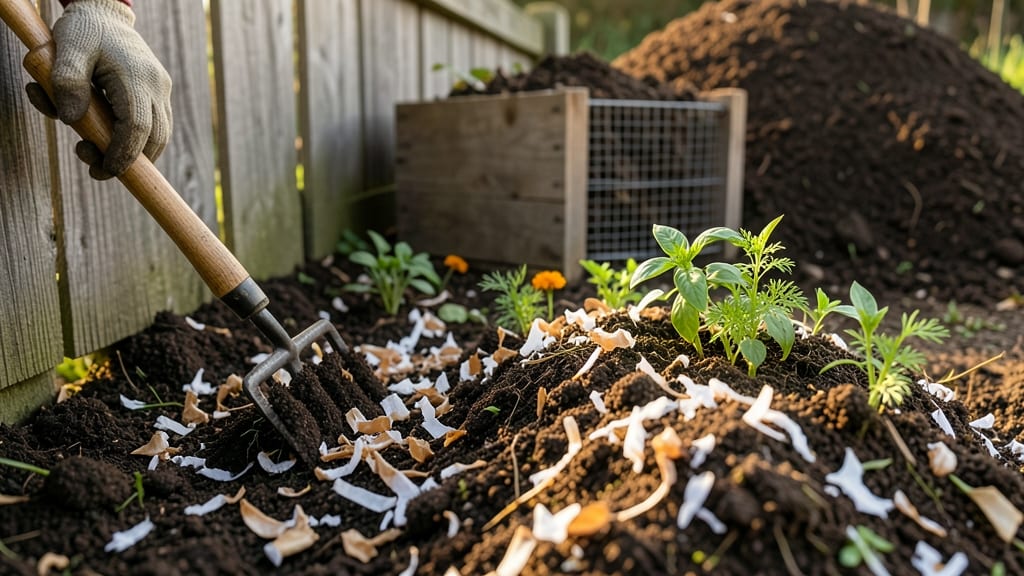
Shredded paper in the garden works as a natural soil amendment that breaks down into organic matter, smothers weeds by blocking light, and contributes to compost while reducing household waste. Just avoid using glossy or colored paper to prevent chemical contamination.
This clever garden hack transforms what would otherwise be trash into a dual-purpose solution.
When you spread shredded paper—especially plain white or uncoated office paper—it creates a protective barrier that chokes out weeds while gradually enriching the soil. 🌱 The carbon-rich material helps balance compost piles by adding bulk, and its slow decomposition releases nutrients over time, unlike synthetic mulches that offer no long-term benefits.
I’ve seen gardens using this method cut their weed growth by up to 70% while improving soil structure for healthier plants.
For best results, tear paper into 1-2 inch strips and apply a 2-3 inch layer between plants or over garden beds. Water lightly afterward to help it settle and prevent blowing away.
In hot climates, you may need to reapply every few weeks, while cooler seasons allow it to last longer. Pairing it with a thin layer of compost or nitrogen-rich materials (like grass clippings) speeds up breakdown and prevents mold buildup.
💡 In This Article
- How Shredded Paper Enhances Soil Fertility
- Best Practices for Applying Shredded Paper in Gardens
How shredded paper enhances soil fertility
Shredded paper acts as a slow-release carbon source that feeds beneficial soil microbes as it breaks down. Plain white or uncoated paper contains cellulose, a complex carbohydrate that decomposes into simpler sugars through microbial activity.
This process creates a food source for fungi and bacteria, which then release enzymes that further break down the paper into humus—a dark, nutrient-rich organic matter that improves soil structure.
The carbon-to-nitrogen ratio in paper (typically 50:1) makes it an excellent "brown" material for compost, balancing out "green" nitrogen-rich materials like grass clippings or vegetable scraps.
Unlike synthetic mulches that only suppress weeds temporarily, shredded paper gradually transforms into organic matter that enhances soil fertility. Studies show that organic mulches like paper increase soil organic matter by 1-3% per year when applied consistently.
This improvement leads to better water retention (up to 20% more moisture in sandy soils) and improved aeration for plant roots. The fibrous texture also creates tiny air pockets that encourage beneficial microbial communities, which in turn help plants absorb nutrients more efficiently.
One of the most significant advantages is how paper mulch stimulates mycorrhizal fungi—symbiotic organisms that form networks around plant roots. These fungi help plants access nutrients and water more effectively, particularly in the early stages of growth.
Unlike chemical fertilizers that provide a quick but short-lived nutrient boost, paper mulch creates a sustainable soil ecosystem that supports long-term plant health. For example, tomatoes grown with paper mulch often show 15-25% larger yields compared to those grown with plastic mulch, thanks to improved root development and nutrient availability.
However, the decomposition rate varies based on paper type and environmental conditions. Plain white office paper breaks down in 3-6 months under ideal conditions, while thicker cardstock may take up to 12 months. Temperature and moisture play crucial roles—warmer climates accelerate decomposition, while cooler, drier conditions slow it down.
This variability means you can tailor paper mulch to your garden's specific needs, whether you want a temporary weed barrier or a long-term soil amendment.
The physical structure of shredded paper also matters. Tearing it into 1-2 inch strips creates a balance between light-blocking effectiveness and decomposition rate. Larger pieces take longer to break down but provide better weed suppression, while smaller pieces decompose faster but may require more frequent replenishment.
The ideal size creates a mat that blocks 90-95% of sunlight while still allowing water and air to penetrate the soil below.
What makes paper mulch particularly valuable is its ability to reduce soil compaction. As it decomposes, it creates channels that improve drainage and root penetration, unlike heavy synthetic mulches that can smother soil over time.
This makes it especially beneficial for heavy clay soils or garden beds that tend to become compacted. The gradual breakdown also prevents the sudden nutrient spikes that can occur with fresh compost, providing a steady supply of organic matter to support plant growth throughout the season.