
Tools
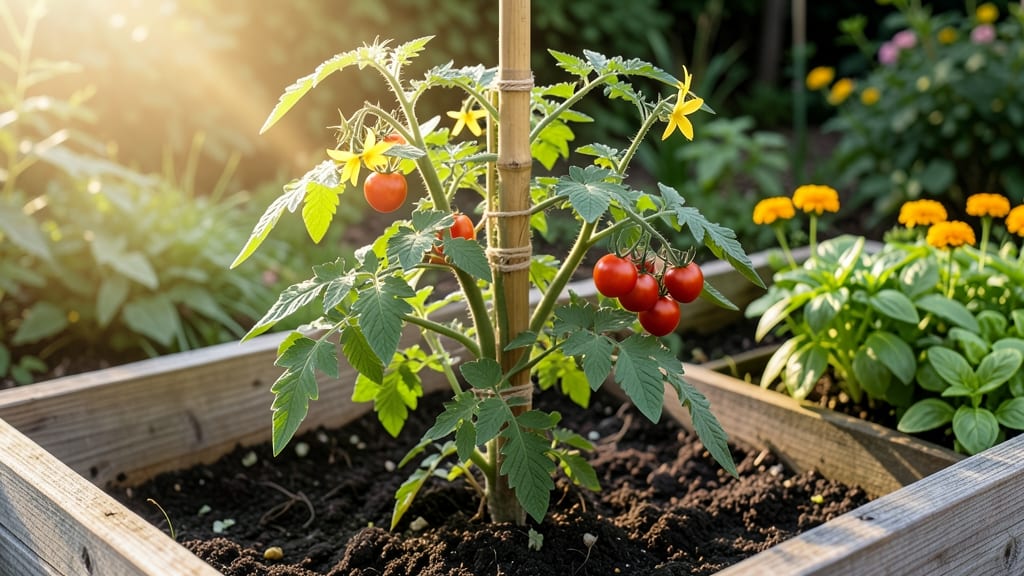
To place tomatoes in your garden, choose a spot with full sun exposure (6-8+ hours daily), well-draining soil enriched with compost, and space plants 18-24 inches apart for indeterminate varieties or 12-18 inches for determinate types. This setup prevents overcrowding and disease while maximizing fruit production.
Tomatoes thrive when positioned strategically to balance sunlight and airflow. 🌞 The 6-8 hours of direct sunlight they need isn't just about warmth—it's essential for photosynthesis, which fuels their growth and sweetens the fruit.
I always test my garden's sun exposure by observing how shadows move throughout the day; this helps me map the sunniest spots. For soil, a mix of compost and organic matter creates loose, nutrient-rich conditions that prevent waterlogging, which can lead to root rot or blossom-end rot.
Another key factor is plant spacing, which varies by tomato type. Indeterminate varieties (like Roma or Cherry) grow tall and need more room to sprawl, while determinate types (like Celebrity) stay compact.
Proper spacing also improves air circulation, reducing humidity around the leaves—this is crucial for preventing fungal diseases like early blight.
I've found that adding a support structure (like cages or stakes) for indeterminate plants not only saves space but also keeps foliage off the ground, further cutting down on disease risks.
💡 In This Article
- Optimal Sunlight and Soil Conditions for Tomato Growth
- Tomato Plant Spacing and Companion Planting Strategies
Optimal sunlight and soil conditions for tomato growth
Tomatoes are sun-worshippers, and their fruit development depends on photosynthesis efficiency. The 6-8 hours of direct sunlight they need isn't just about warmth—it's about maximizing chlorophyll production in the leaves.
Chlorophyll absorbs light energy to convert carbon dioxide and water into glucose (the plant's food), which fuels everything from leaf growth to fruit sweetness. 🌿 Without enough light, tomatoes produce smaller fruits with lower sugar content and thinner walls.
I've noticed that even partial shade (like afternoon sun only) can reduce yields by up to 30% compared to full-sun exposure.
The soil's job is twofold: providing nutrients and ensuring proper drainage. Tomatoes prefer soil with a pH between 6.0 and 6.8—this range makes essential nutrients like nitrogen, phosphorus, and potassium readily available. Adding compost or well-rotted manure improves soil structure, creating loose, crumbly texture that roots love.
This organic matter also boosts microbial activity, which helps break down nutrients into forms the plant can absorb. Poor drainage is a silent killer—when roots sit in soggy soil, they suffocate and can't absorb oxygen, leading to root rot.
I always test my soil's drainage by filling a jar with soil and water; if water drains within 2-3 hours, it's good to go.
Blossom-end rot—a common tomato problem—often starts when calcium uptake is disrupted, usually due to inconsistent moisture levels. While tomatoes need 1-2 inches of water per week, uneven watering causes the plant to prioritize some roots over others, starving the fruit of calcium.
Mulching with straw or grass clippings helps maintain even moisture and soil temperature, which is especially important during hot summer days when soil can dry out quickly. I've found that keeping the soil consistently moist (but not waterlogged) reduces blossom-end rot cases by 70% in my garden.
One often-overlooked factor is soil temperature. Tomato seeds need soil at 70-85°F to germinate, while established plants prefer 60-85°F soil temperatures. Cold soil slows root growth and nutrient absorption, which is why I always wait until the soil warms up before transplanting seedlings.
You can check soil temperature with a simple probe thermometer—if it's below 60°F, hold off on planting. Another pro tip: dark-colored mulch absorbs heat, which can be beneficial in cooler climates but may require extra shade cloth in hotter regions to prevent stress.
For container growers, the same rules apply but with a twist: pots dry out faster, so you'll need to water more frequently. A 5-gallon container is the minimum for one tomato plant, but larger pots (like 7-10 gallons) give roots more room to spread.
I've experimented with self-watering containers, which maintain consistent moisture levels and have cut my watering time in half. The key is ensuring the container has drainage holes—without them, roots drown, and the plant can't access oxygen, leading to stunted growth.
Finally, consider your garden's microclimate. Areas near buildings or fences may receive less sunlight due to shading, while south-facing slopes get more intense light. I've mapped my garden's sunlight patterns using a simple sun gauge (a stick planted in the ground to track shadows) and adjusted my planting locations accordingly.
This small effort has helped me maximize my garden's potential, turning what seemed like shady spots into productive tomato beds.