
Tools
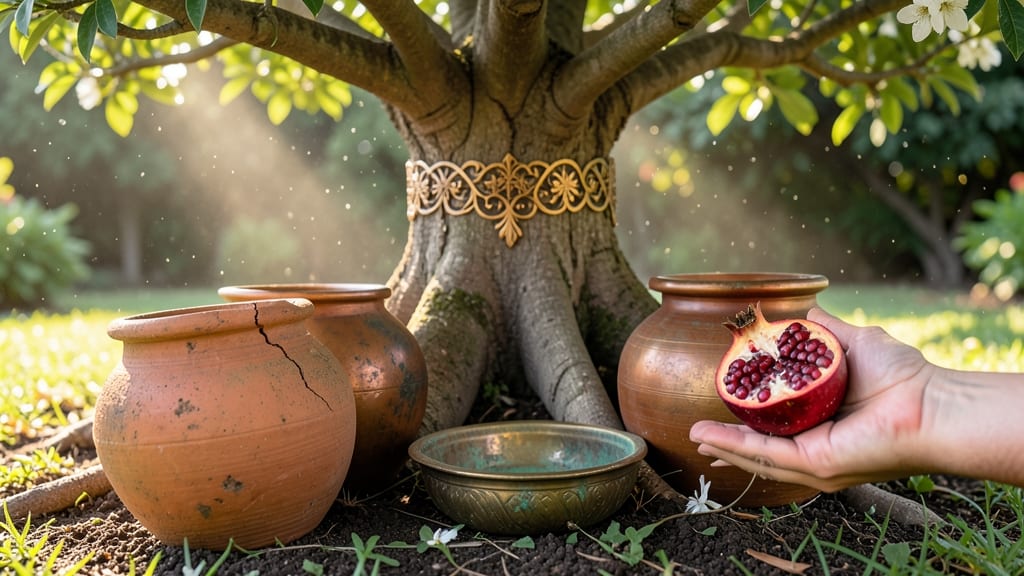
The garden in the Bible represents Eden, God's perfect creation filled with every herb bearing seed and every tree pleasing to the eye, including the iconic Tree of Life and Tree of Knowledge of Good and Evil. This sacred space embodied divine provision, harmony, and the foundation of human relationship with God.
The biblical garden of Eden serves as more than just a backdrop—it's a theological cornerstone illustrating God's creative power and intentional design. 🌿 Scholars suggest the lush vegetation described (like figs, pomegranates, and wheat) reflects ancient Near Eastern agricultural realities, where sacred groves played central roles in religious practices.
What's fascinating is how this garden symbolizes both divine sustenance through the Tree of Life and humanity's first moral choice through the Tree of Knowledge.
This concept extends beyond Genesis, influencing later biblical gardens like those in the Temple courts (Ezekiel 47:12) where healing waters flowed. The Eden narrative establishes a pattern where gardens become sacred spaces connecting humans to God's provision and purpose—a theme that resonates through Jewish and Christian traditions to this day.
💡 In This Article
- Botanical and Symbolic Elements of Eden’s Garden
- How Biblical Gardens Reflect Ancient Horticulture Practices
Botanical and symbolic elements of Eden’s garden
The biblical description of Eden paints a vivid picture of a thriving ecosystem where every plant served both practical and symbolic purposes.
Archaeobotanists suggest the "every herb bearing seed" likely included staple crops like wheat (for bread) and barley (for beer and porridge), which were fundamental to ancient Near Eastern diets.
The mention of fruit-bearing trees—particularly figs and pomegranates—reflects their prominence in the region's agriculture and religious symbolism, as these fruits were often associated with fertility and abundance in Mesopotamian mythology.
The two most iconic trees, the Tree of Life and Tree of Knowledge, represent contrasting concepts: eternal sustenance versus moral choice. 🌳 The Tree of Life likely symbolized immortality and divine provision, while the Tree of Knowledge represented the boundary between human autonomy and divine authority.
Botanically, some scholars speculate the Tree of Knowledge might have been a pomegranate (due to its seeds symbolizing potential life) or a fig (a common sacred tree in the region).
The rivers flowing from Eden—Pishon, Gihon, Hiddekel, and Euphrates—would have supported lush vegetation, with the Tigris and Euphrates (modern-day Hiddekel and Euphrates) still flowing through fertile agricultural regions today.
What makes Eden's garden unique is its dual nature as both an agricultural paradise and a theological statement. The lush vegetation served as a visual representation of God's creative power and provision, while the specific inclusion of the Tree of Knowledge introduced the concept of moral agency.
This combination of practical sustenance and symbolic meaning mirrors how ancient Near Eastern cultures viewed their sacred groves—spaces where the divine and natural worlds intersected.
The precise botanical identification remains debated, but the symbolic framework is clear: Eden was designed to be both functional and meaningful, reflecting God's intentional care for humanity.
Consider how the garden's elements would have appeared in the ancient Near East: towering date palms providing shade, fragrant herbs like coriander and anise lining the paths, and fruit trees heavy with figs and grapes.
The combination of these plants would have created a sensory experience of abundance—sweet aromas, vibrant colors, and the sound of rustling leaves—all designed to evoke a sense of divine presence and provision. This multi-sensory approach to creation reflects how ancient cultures understood sacred spaces as fully immersive experiences.
The garden's layout also carries symbolic weight. The placement of the Tree of Knowledge in the center suggests it was the focal point of Eden's design, with all other vegetation arranged to draw attention toward it.
This deliberate arrangement would have made the tree's significance impossible to miss—a visual representation of humanity's central moral challenge. The rivers' fourfold division might symbolize the garden's connection to all four cardinal directions, reinforcing its status as a universal creation point rather than a localized paradise.
What's particularly fascinating is how these botanical elements connect to later biblical traditions. The same plants mentioned in Eden—like figs and pomegranates—appear in temple decorations and agricultural laws, suggesting their continued sacred significance.
The concept of a garden as a place of divine encounter also foreshadows later biblical gardens like Solomon's temple courts, where healing waters flowed (Ezekiel 47:12), maintaining the theme of sacred spaces as places of both provision and revelation.