
Vegetables
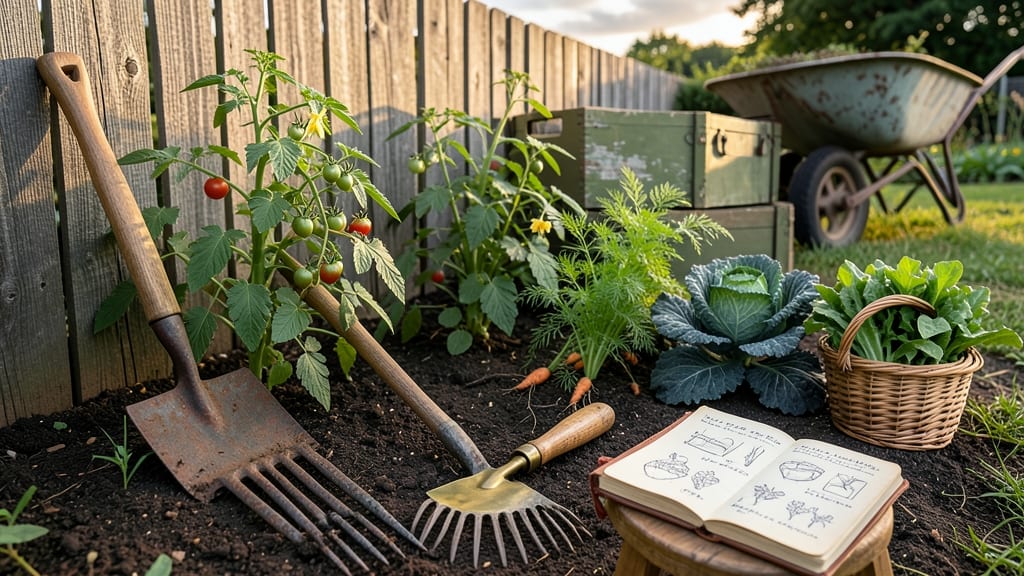
The history of victory gardens shows how World War II transformed American backyards into vital food sources, with millions of home gardens producing nearly half the nation's vegetables by 1943 through government-organized cultivation efforts.
The concept began as a wartime strategy to ease food shortages by encouraging families to grow their own produce. 🌱 The U.S. government launched seed distribution programs and even published gardening guides, while women played a key role in organizing neighborhood plots.
This movement didn't just feed families—it created a cultural shift that still influences urban farming today.
What's fascinating is how these gardens became a symbol of patriotism and self-sufficiency. Schools, churches, and workplaces all participated, turning even small urban spaces into productive plots. The techniques developed during WWII—like intensive planting and crop rotation—are now foundational in modern community gardening movements.
💡 In This Article
- How WWII Victory Gardens Revolutionized Home Gardening
- Legacy of Victory Gardens in Modern Urban Farming
How WWII victory gardens revolutionized home gardening
The U.S. government launched victory gardens as a coordinated effort to combat food rationing during WWII. In 1943 alone, over 20 million gardens produced 40% of the nation's vegetables, equivalent to feeding the entire population of New York, Chicago, and Philadelphia combined.
The War Food Administration distributed 10 million seed packets and 15 million gardening pamphlets—free to families—while radio broadcasts and newspaper columns taught techniques like intensive planting and crop succession to maximize yields in small spaces.
Propaganda played a crucial role in mobilization. Posters featuring Rosie the Riveter with a shovel declared, "Grow Food for Freedom," while First Lady Eleanor Roosevelt demonstrated vegetable gardening on the White House lawn.
Women, who made up 75% of gardeners, organized neighborhood plots and even turned balconies and rooftops into growing spaces. The government even encouraged urban farming by promoting "window gardens" for apartment dwellers, using 10-inch pots to grow herbs and salad greens.
Logistically, victory gardens addressed critical shortages by targeting high-demand crops like tomatoes, potatoes, and carrots—produce that required less water and space than field crops. The Victory Garden Committee provided free soil tests and composting advice, while local extension agents taught pest control without chemicals (a precursor to organic gardening).
This systematic approach turned backyards into mini food production units, proving that decentralized farming could be just as effective as large-scale agriculture.
Socially, victory gardens fostered community. Schools hosted "Junior Victory Gardens", and workplaces like factories and shipyards created shared plots where employees could grow food together. The movement also reduced grocery store demand by 10 million tons annually, freeing up shipping for military supplies.
This collective effort wasn’t just about food—it was about resilience and shared purpose during wartime.
What’s often overlooked is how victory gardens democratized gardening. Before WWII, vegetable growing was largely a rural practice, but the war effort made it accessible to city dwellers.
Techniques like square-foot gardening (planting in 1-foot grids to maximize space) and vertical growing (using trellises for beans and peas) became staples of modern urban farming. The government even published "How to Grow More Vegetables", a 160-page manual that became a bestseller.
The psychological impact was profound too. Gardening provided a sense of control and hope during uncertain times. Families who grew their own food reported higher morale and stronger community bonds.
This emotional connection to growing food is why victory gardens left a lasting legacy—long after the war ended, people kept planting, not just for survival, but for joy and connection.