
Tools
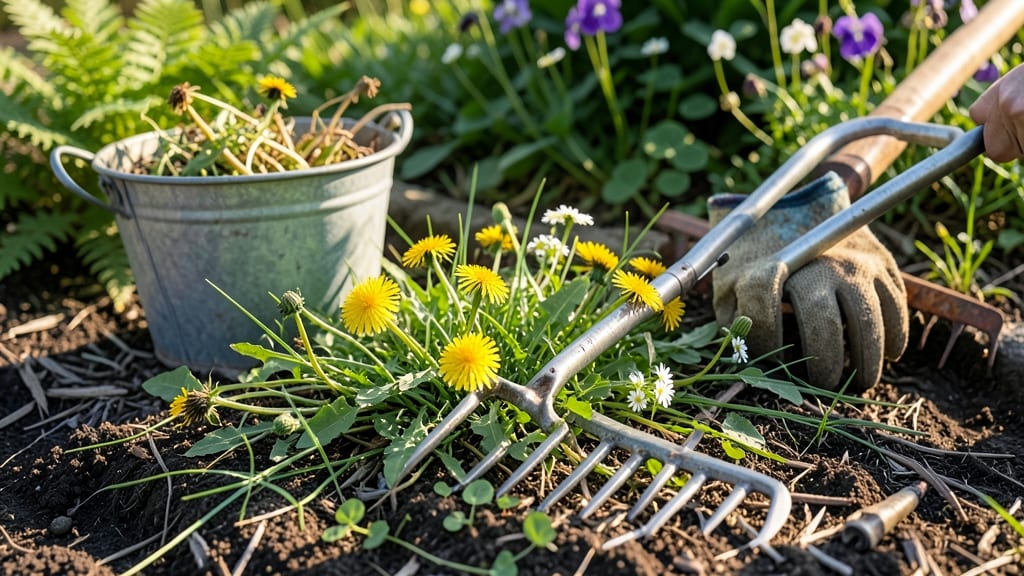
Selecting the right weed clearing garden tool comes down to your garden's size, the weeds you're dealing with, and how much physical effort you're willing to put in. Handheld options like hoes or weeder forks work wonders for small patches, while power tools such as string trimmers or weed eaters tackle larger areas with ease. Pay close attention to blade sharpness, ergonomic handles, and material strength for tools that last.
Your garden's weed situation isn't one-size-fits-all, and neither are the tools to handle it. 🌱 For stubborn weeds with deep roots, a sturdy weeder fork with serrated tines can make all the difference, while a simple hand hoe works better for surface-level weeds.
Power tools bring speed but require more maintenance—like keeping blades sharp and checking fuel levels. I always recommend testing a few options if you're unsure, since the right tool can cut your weeding time in half.
Another key factor is how often you'll use the tool. If you're maintaining a small vegetable patch weekly, a lightweight manual weeder might be perfect.
But for larger lawns or perennial weeds, investing in a power tool could save your back—and your patience—over time. 💪 Remember, the best tool isn't always the most expensive one; it's the one that matches your specific needs and makes the job feel manageable.
💡 In This Article
- Weed Clearing Tool Mechanics: How to Match Tools to Weed Types
- Top Garden Weed Tools by Application: Handheld vs. Powered vs. Specialty
Weed clearing tool mechanics: how to match tools to weed types
The effectiveness of a weed clearing tool depends entirely on how it interacts with the weed's root system and soil structure. Annual weeds like crabgrass have shallow roots that spread horizontally, making them perfect targets for flat-bladed hoes or stirrup hoes.
These tools cut through the roots just below the soil surface, preventing regrowth by removing the entire plant—including the seed head.
The key here is the blade's angle: a 45-degree bevel creates a clean cut that minimizes soil disturbance, while a straight-edged blade works better for precise slicing near delicate plants.
Perennial weeds, however, demand a different approach because their deep taproots (like dandelions or thistles) can regrow from even tiny root fragments. A weeder fork with 4-6 serrated tines spaced 1-2 inches apart is ideal—it prongs the soil to grasp the root ball, then lifts it cleanly without breaking.
The tines' spacing matters too: wider gaps (up to 2.5 inches) work for loose soil, while narrower tines handle compacted earth. For stubborn roots, a lever-action weeder applies 15-20 pounds of force per pull, making it easier to extract roots without bending over.
Soil type also plays a critical role. Sandy soil dries quickly, so tools like the Hori-Hori knife (a Japanese digging knife with a 3-inch wide blade) slice through weeds with minimal resistance.
In clay-heavy soil, however, a stirrup hoe with a 3-foot long handle gives you leverage to cut through the dense matrix without exhausting your arms. The handle length reduces wrist strain by distributing force over a longer arc—critical for tools used for 20+ minutes at a stretch.
Weed maturity affects tool choice too. Young weeds (under 2 weeks old) are easiest to remove by hand or with a weeding knife, while mature weeds require tools that can penetrate deeper.
A dandelion digger, for example, has a 1-inch wide blade that slides between the plant and soil, severing the taproot at its base. The blade's width ensures it doesn't get clogged with dirt, while its serrated edge prevents the root from slipping out during extraction.
For aquatic or marshy areas, tools like the grapple weeder use claw-like tines to rake weeds from the surface before they take root. The tines' design mimics a rake but with sharper angles to slice through water hyacinth or duckweed without damaging the surrounding ecosystem.
In contrast, power tools like string trimmers rely on a high-speed nylon line spinning at 8,000-10,000 RPM to shear weeds at the base, making them ideal for large, open areas where manual tools would be impractical.
One often overlooked factor is the tool's weight distribution. A lightweight aluminum hoe (weighing 1-2 pounds) reduces fatigue for extended use, while a heavy-duty steel weeder fork (weighing 3-5 pounds) provides more leverage for tough roots.
The sweet spot for ergonomics is a balanced center of gravity, which prevents wrist strain—a common issue with tools that feel "front-heavy" or "back-heavy" when used.