
Tools
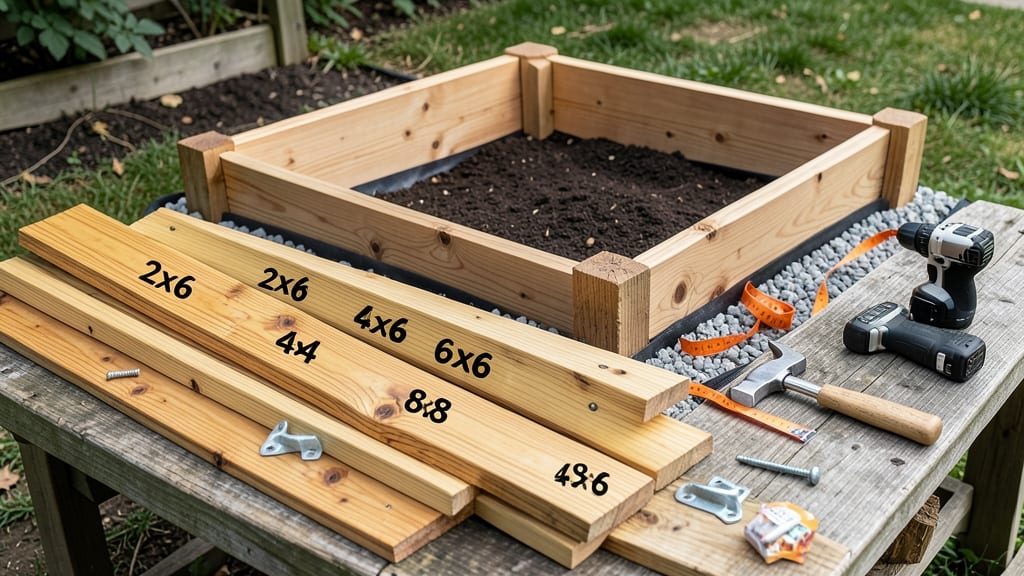
When building a raised garden bed, the standard wood sizes are 2x6 or 2x8 boards (actual dimensions 5.5x5.5 or 7.25x5.5 inches) for sides, with a minimum 6-inch height for drainage and accessibility. Use 4x4 corner posts (3.5x3.5 inches) spaced 3-4 feet apart to ensure stability and soil retention.
Choosing the right wood dimensions isn't just about aesthetics—it directly impacts how sturdy and long-lasting your garden bed will be. 🌱 For example, 2x8 boards create wider planting surfaces, ideal for larger plants like tomatoes or squash, while 2x6 boards work better for smaller beds or tight spaces.
The corner posts' 4x4 size ensures they won't wobble under the weight of soil and plants, especially in windy areas. I always recommend cedar or redwood for their natural rot resistance, but if you're on a budget, pressure-treated pine can work too—just make sure it's labeled "ground-contact" safe.
Pro tip: If you're planning to fill your bed with 12 inches of soil, consider doubling the board thickness (like using 2x8s stacked vertically) to prevent sagging over time.
This extra support is particularly important if you're growing heavy crops or want to use the bed for multiple seasons without rebuilding.
💡 In This Article
- Optimal Raised Garden Bed Wood Sizes by Material Type
- Step-by-Step Guide to Calculating Wood Lengths for Custom Beds
Optimal raised garden bed wood sizes by material type
The choice of wood dimensions directly impacts your garden bed's lifespan and functionality. Cedar and redwood are the gold standards because their natural oils resist rot and insects, making them ideal for long-term use.
For these materials, 2x6 boards (5.5x5.5 inches) are perfect for standard 6-inch-tall beds, while 2x8 boards (7.25x5.5 inches) provide extra width for larger plants or deeper soil layers. The wider surface area of 2x8s also makes weeding and harvesting easier, especially for sprawling crops like zucchini or melons.
Pressure-treated pine is a budget-friendly alternative, but its 4x4 corner posts (3.5x3.5 inches) must be spaced no more than 3-4 feet apart to handle the extra weight. Unlike cedar, pine absorbs moisture more readily, so I recommend sealing all edges with a non-toxic wood preservative.
For beds taller than 10 inches, consider using 2x10 boards (9.25x1.5 inches) for sides—the extra thickness prevents warping under the weight of moist soil and heavy mulch.
Here's what happens when you skimp on dimensions: A 6-inch-tall bed made with 1x6 boards (0.75x5.5 inches) will sag within a year, especially in wet climates.
The soil's weight causes the boards to bow outward, creating gaps where weeds invade. 🌿 Thicker boards distribute weight more evenly, and the 4x4 posts act as vertical supports, keeping the structure square.
For extra stability in windy areas, add diagonal braces between posts—this is particularly important for beds over 12 inches tall.
The material choice also affects how often you'll need to replace components. Cedar lasts 10-15 years untreated, while redwood can exceed 20 years due to its higher tannin content. Pine, even pressure-treated, typically needs replacement every 5-7 years in ground contact.
If you're building a bed for perennial plants like asparagus or rhubarb, investing in cedar or redwood upfront saves money long-term by reducing maintenance.
Consider this real-world example: A 4x8-foot bed filled with 12 inches of soil weighs approximately 2,000 pounds when saturated. That's why the 4x4 posts are critical—they bear the majority of the load at each corner.
Without proper sizing, the bed could develop a "saddleback" shape, where the center sags while the corners remain level. This distortion makes planting and harvesting uneven, and can even damage root systems.
For those with mobility challenges, wider boards and lower heights (6 inches max) make gardening more accessible. A 3-foot-wide bed with 2x6 sides allows easy reach from wheelchairs or seated positions, while the 4x4 posts ensure the bed doesn't tip when leaned against.
This thoughtful sizing transforms gardening from a physical challenge into an inclusive activity.