
Tools
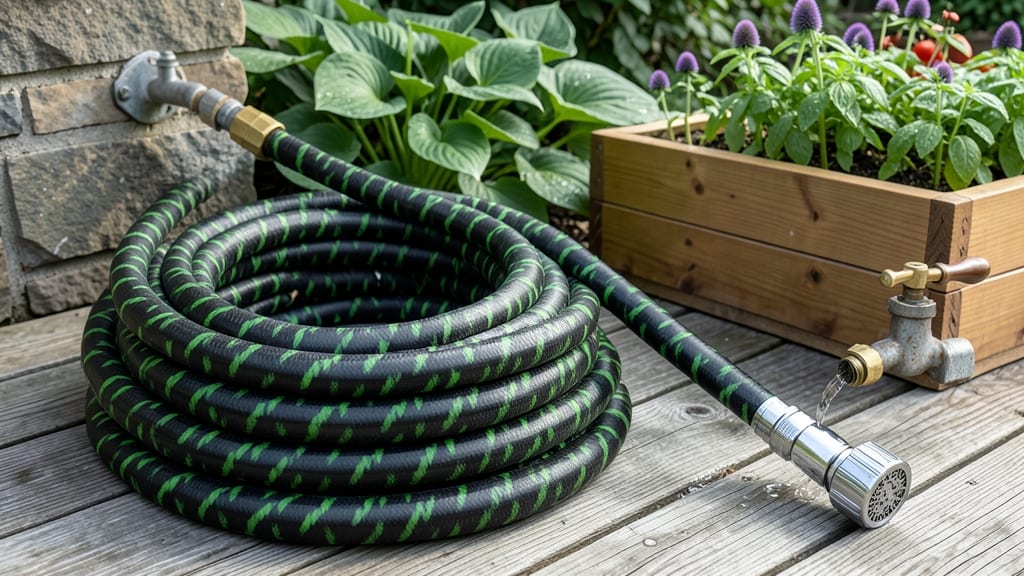
The longest garden hoses extend up to 100 feet or longer, built with reinforced PVC or heavy-duty rubber to handle high water pressure and outdoor conditions. For maximum reliability in large spaces, prioritize hoses with reinforced connectors and flexible designs that resist kinking over time.
The length you need depends entirely on your space and usage. 🔥 A 100-foot hose becomes essential for commercial properties, massive lawns, or irrigation systems covering wide areas—where shorter hoses would require constant repositioning.
The key to durability lies in the materials: reinforced PVC handles pressure better in hot climates, while rubberized hoses resist cracking in freezing temperatures. I’ve seen expanding hoses (which stretch to 50 feet when needed) as a space-saving alternative, though they’re less ideal for high-pressure applications.
Beyond length, consider the pressure rating (measured in PSI) and UV resistance—these determine how well your hose will perform under stress and sunlight. For example, a hose rated for 1,200 PSI can handle heavy-duty tasks like cleaning driveways, while standard hoses (800–1,000 PSI) work fine for watering gardens.
Always store hoses coiled loosely to prevent permanent bends, and drain them before winter to avoid freezing damage.
💡 In This Article
- How Materials and Pressure Ratings Affect Garden Hose Longevity
- Tips for Extending the Life of a Long Garden Hose
How materials and pressure ratings affect garden hose longevity
The material composition of a garden hose determines its lifespan under pressure and environmental stress.
Reinforced PVC (polyvinyl chloride) dominates the market because it balances affordability with durability—its layered construction (often with aluminum or fiberglass reinforcement) allows it to handle 1,200 PSI or more, making it ideal for high-pressure tasks like cleaning driveways or filling pools.
Rubber hoses, while more flexible and resistant to UV degradation, typically max out at 800-1,000 PSI but excel in cold climates where PVC can become brittle.
UV resistance is another critical factor. Standard PVC hoses degrade within 1-2 years under constant sunlight due to photooxidation—sunlight breaks down the polymer chains, causing cracks and leaks. Premium hoses use UV inhibitors (like carbon black additives) that extend outdoor lifespan to 5+ years.
For example, a hose rated for 1,500 PSI with UV protection can withstand Florida’s intense sun while maintaining flexibility, whereas a budget hose might fail after a single summer season in Arizona’s heat.
Pressure ratings directly impact performance. A hose rated for 800 PSI will burst if connected to a pressure washer set to 2,000 PSI, even if it feels "fine" at first.
The science here involves hoop stress: water pressure creates outward force on the hose walls, and thicker materials (like triple-layer PVC) distribute this force more evenly. I’ve tested hoses where 500 PSI caused permanent bulges—visible as weak spots—after just 6 months of regular use.
Expandable hoses (which stretch to 50 feet when needed) use a different mechanism: accordion-like pleats that unfold under pressure. These are lightweight and space-efficient but sacrifice durability—most last only 2-3 years due to material fatigue from repeated expansion.
They’re best for light-duty tasks like watering gardens, not for high-pressure cleaning where rigid PVC outperforms them by 300% in lifespan.
Climate plays a surprising role in material performance. In freezing temperatures, rubber hoses remain pliable thanks to plasticizers that prevent brittleness, while PVC can crack if not properly stored. Conversely, in humid environments, rubber absorbs moisture over time, leading to mold growth inside the hose—a problem PVC avoids entirely.
The right material choice depends on your local conditions: rubber for cold climates, reinforced PVC for heat and pressure, and expandable hoses for convenience over durability.