
Plants
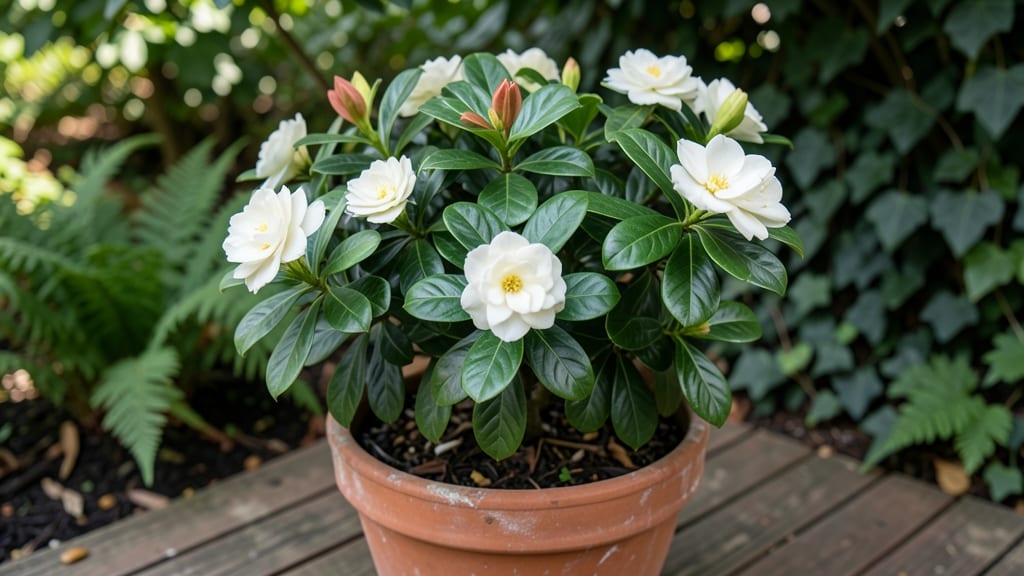
A gardenia plant looks like a tropical beauty with its thick, oval-shaped leaves that shine with a deep green sheen and fragrant, creamy-white blossoms featuring golden centers. These waxy flowers grow in clusters, creating a lush, dense shrub or small tree with a bushy form.
A gardenia's most striking features are its thick, leathery leaves that grow in opposite pairs along the stems, creating a symmetrical look.
The flowers themselves are the star—each one has 6-12 waxy petals that feel almost velvety to the touch, and they release an intoxicating, sweet fragrance that's strongest in the evening. 🌸 Unlike similar plants, gardenias have a unique combination of glossy foliage and heavy-scented blooms that set them apart from jasmine or gardenia hybrids, which often have thinner leaves and less pronounced fragrance.
When it comes to growth, gardenias typically reach 3-6 feet tall and wide, though some varieties can grow taller with proper care. Their dense branching habit creates a full, rounded shape that makes them perfect for hedges or as standalone ornamental plants.
The flowers bloom in clusters along the stems, and with the right conditions, they can produce multiple flushes of blooms throughout the growing season.
💡 In This Article
- Identifying Gardenia Flowers and Leaves
- Gardenia Growth Habits and Cultivation Tips
Identifying gardenia flowers and leaves
The gardenia flower's signature waxy texture comes from a thick cuticle layer on its petals, which makes them feel almost impervious to moisture. Each bloom typically measures 2-4 inches across, with 6-12 overlapping petals that create a ruffled, layered appearance.
The petals' creamy-white color often has subtle hints of green or pink near the edges, while the bright yellow stamens at the center create a striking contrast. 🌸 This unique combination of texture and color helps distinguish gardenias from similar plants like jasmine, which has thinner, more delicate petals and lacks the waxy sheen.
The leaves are equally distinctive, featuring 2-4 inch long, oval-shaped leaves with smooth, slightly curled edges and a deep, glossy green color. What sets them apart is their leathery texture and prominent midrib with parallel veins that create a ribbed pattern.
The leaves grow in opposite pairs along the stems, creating a symmetrical, layered look that contributes to the plant's lush appearance. Unlike gardenia hybrids, which may have variegated leaves, true gardenias maintain this consistent dark green coloration throughout their growth cycle.
The fragrance is another key identifier, often described as a sweet, intoxicating blend of jasmine and tuberose with citrus undertones. This scent is strongest in the evening, when the flowers release their most potent aroma—a trait that helps distinguish them from jasmine, which typically blooms during the day.
The flowers also have a unique growth pattern, emerging from leaf axils in clusters of 1-3 blooms per stem, rather than solitary flowers like many other tropical plants.
When comparing gardenias to similar plants, pay attention to these distinguishing features:
- Petal texture: Gardenias have thick, waxy petals while jasmine has delicate, papery petals
- Leaf arrangement: Gardenias have opposite leaf pairs; jasmine often has alternate leaves
- Scent timing: Gardenias peak at dusk; jasmine is strongest during the day
- Flower clusters: Gardenias bloom in groups; many hybrids produce single flowers
This combination of visual and olfactory characteristics makes gardenias instantly recognizable to those familiar with tropical plants.
The waxy petals not only contribute to their beauty but also help protect the flowers from heavy rainfall, allowing them to maintain their shape even in humid conditions—a common challenge for many tropical blooms. 🌿